How to Build Brisket Bark
Brisket bark forms when the rub, rendered fat and smoke dry onto the surface and darken over a long cook. The best bark comes from a dry surface, a rub with enough sugar and spice to caramelize, a smoky first six hours at 220–240°F, and waiting to wrap until the bark has set.
What bark is, and what it isn't
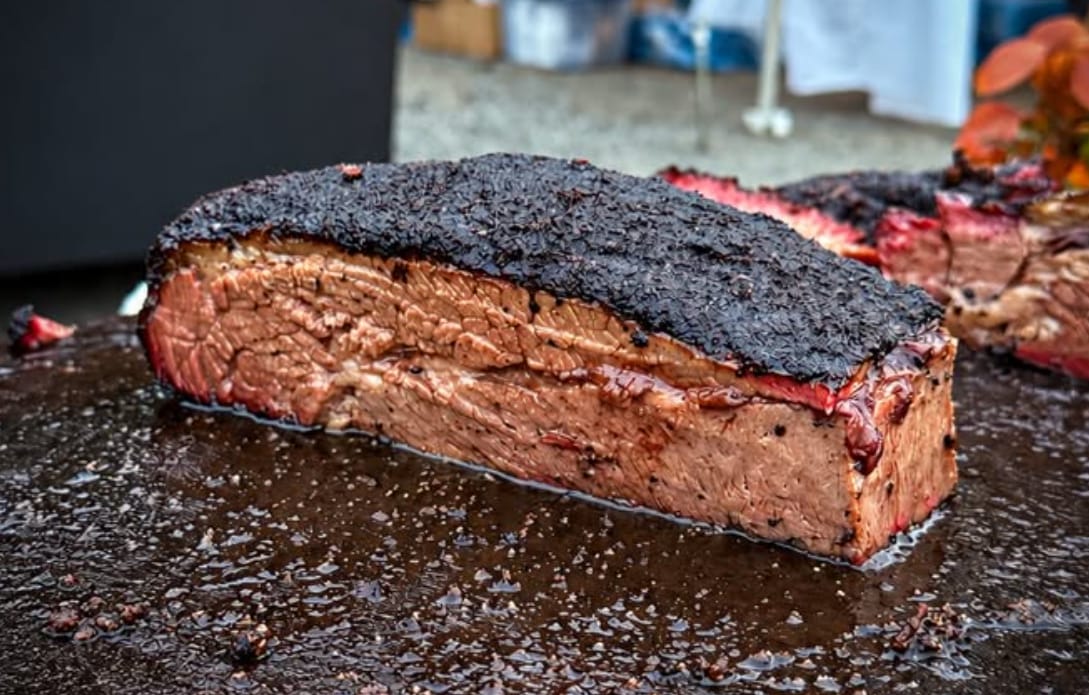
Bark is the dark, firm crust on the outside of a smoked brisket. It's built in layers: the rub dissolves into the moisture on the surface, fat renders through it, smoke settles on it, and hours of dry heat turn all of that into a crust that's darker and more flavorful than the meat underneath.
Dark is not the same as burnt. Good bark is near-black but still tastes savory and a little sweet, holds together when you slice, and gives a slight crunch. Burnt bark tastes bitter and acrid, flakes off as dry soot, and smells sharp instead of smoky. If you can't tell by looking, taste a corner of the point.
The five things that make or break bark
1. Surface moisture
Bark can't start forming until the surface dries. A wet brisket spends the first hours of the cook evaporating water instead of building a crust. Pat it dry, then rest it uncovered on a rack in the fridge overnight after it's seasoned. The surface goes tacky and dry, and the bark gets a head start.
2. The rub
The rub is what the bark is made of. You want ingredients that darken and caramelize under long, low heat, plus coarse pepper and garlic for texture. A rub that's mostly salt seasons the meat but gives the crust little to build on.
3. Pit temperature
Run it in two stages: 220–240°F for the first six hours while the bark builds, then 250–275°F to finish. Within each stage, steady matters more than the exact number: big swings and hot spots are what scorch one side while the other stays pale.
4. Smoke and airflow
The brisket takes on smoke and color fastest early in the cook, so start with a slow, smoky fire: airflow choked down, firebox door cracked. Once that first fire burns down to a good coal bed, keep feeding it a few splits at a time so it burns steadier from there. A fire that stays smothered all day is what leaves a bitter film.
5. Wrap timing
Wrapping traps steam, and steam softens bark. Wrap too early and the crust never sets. Wait until late in the cook, when the flat hits about 195°F. By then the bark is set, and foil or butcher paper both work.
How Moon Rock builds bark
Moon Rock is a brisket and bark rub, and every main ingredient has a job in the crust. The color comes from the ingredients themselves: no dye, no charcoal.
- Coffee deepens the color of the crust and adds a roasted, savory note.
- Molasses brings dark color and a deeper sweetness that darkens further as it cooks.
- Brown sugar caramelizes over the long cook, which is a big part of what makes the crust firm and dark.
- Black pepper and granulated garlic give the bark its texture and its bite.
Moon Rock is built to be used with your own salt, so you set the salt for the cut. How much salt, cut by cut →
More on what coffee does to bark →
Will's brisket bark method, step by step
Trim. Take the fat cap down to about a quarter inch and square off the edges so the rub and smoke reach the meat evenly.
Keep the seasoning simple. Kosher salt (about 1/2 tsp per pound), coarse 16-mesh black pepper, then 1–2 tablespoons of Moon Rock per pound on every surface: top, bottom, sides and edges. Rest it uncovered in the fridge overnight if you can.
Start smoky. Light the fire with charcoal and a few solid splits, then choke the airflow down: exhaust mostly closed, intake vents closed, firebox door cracked. That slow first burn builds smoke and color.
Hold 220–240°F until hour six. Once the first fire burns down to coals, add 2–3 splits, and feed it the same way about every hour.
Hour six: rotate and turn it up. Turn the flat toward the fire, cover the thin end of the flat with foil, and run the pit at 250–275°F for the rest of the cook.
Wrap at 195°F. When the flat hits about 195°F, wrap in foil or butcher paper. The bark is set by now, so either one works.
Hold it overnight. Straight into a warmer, or an oven on its lowest setting (150–170°F), keeping the brisket above 140°F.
The full Moon Rock brisket recipe →

Troubleshooting bark
Soft or mushy bark
Usually steam: the brisket was wrapped before the bark set. Early in the cook foil holds in more steam than paper, so an early foil wrap softens bark the most. Wait until the flat hits about 195°F to wrap. A surface that went on wet, or heavy spritzing, does the same thing.
Bitter or too-black bark
Look at the fire before the rub. A smoky start builds color, but a fire that stays smothered and smoldering for the whole cook leaves a bitter coating; so does a pit running well above 275°F or a brisket sitting over a hot spot. Let the first fire burn down to coals and feed it steadily from there, check your pit's temperature at grate level, and turn the brisket if one side is darkening faster.
Patchy bark
Uneven rub coverage, a wet spot where the meat touched the rack or another piece, or uneven heat. Season every surface evenly, let it rest on a rack so air reaches all sides, and rotate the brisket if your pit has a hot side.
Rub sliding off
The surface was too wet, or the rub went on just before the cook. Pat the brisket dry, salt and rub it the night before, and give it time in the fridge. The rub sweats into the surface and sticks. A thin binder helps if you're short on time.
Bark for a turn-in box, a lunch service, or the backyard
The turn-in box
In competition the judges see the bark before they taste it. Teams want even, deep color on every slice and a crust that holds on through the cut and the trip to the judges' table.
A lunch service
A restaurant brisket gets cooked the night before and held for hours. A late wrap is what makes that work: the bark is fully set before the brisket goes into the warmer, so it's still intact when it hits the cutting board.
The backyard
At home you can do what competition and restaurant cooks can't: run it unwrapped the whole way and slice it straight off the rest for the firmest bark you'll get.
“Hands down the best bark I've gotten to date. It'll have your meat looking like a meteorite.”
— Big Fox · Backyard Pitmaster, Los Angeles, CA
Quick FAQ
When do I wrap brisket?
Late. Will wraps when the flat hits about 195°F internal. By then the bark has had the whole cook to set, so wrapping won't soften it much. If you're not sure the bark is set, scratch the surface lightly: if the rub stays put and the crust feels dry and firm, you're good.
Butcher paper or foil?
If you wrap late, at about 195°F in the flat, either one. The bark is set, and you won't notice much difference. Wrap early, around the stall, and it matters: butcher paper breathes and keeps the crust firmer, while foil traps the steam and softens the bark.
Does spritzing hurt bark?
It can. Spritzing before the bark sets can wash rub off and keeps the surface wet, which slows the crust. If you spritz, wait until the bark has set and keep it light.
Do I need a binder?
No. If you salt and rub the night before, the moisture the salt pulls to the surface holds the rub on. A thin layer of mustard or oil helps when you're rubbing right before the cook, and you won't taste it after a long smoke.
Does the sugar in the rub burn?
Not at normal smoking temperatures with a well-run fire. Through the long middle of the cook, evaporation keeps the surface of the brisket well below pit temperature, so the sugar caramelizes and darkens slowly instead of scorching. Hot spots, direct heat and pits running well above 275°F are where sugar starts to burn.
Keep going
- Smoked brisket recipe: the full cook, from trim to slice.
- How to salt brisket: salt amounts by cut, and why Moon Rock leaves the salt to you.
- Cook timeline planner: work backward from dinner time.
- Shop Moon Rock: 5 oz jar, free shipping on 2 or more.
Available at Woodlands Market · Mollie Stone's · United Markets · KenduSpice.com
Shop Moon Rock